

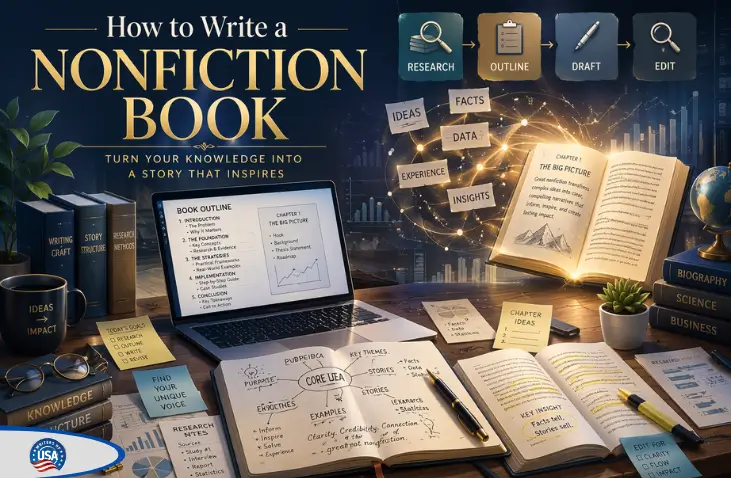
Learning how to write a nonfiction book is a life-changing process that lets you turn knowledge into a strong way to reach people and create a steady income without constant work. In today’s crowded market, what separates a popular book from one forgotten is your skill at turning big ideas into real results that help the reader. Whether you are sharing a special way of doing business or explaining a personal way of thinking about life, your main aim must be to build a strong sense of trust with your readers right from the start. By using solid research and a clear plan for the book, you can make sure your work stands out as a trusted source, leading to steady sales and lasting respect in your field.
How To Start Writing A Nonfiction Book With Clear Purpose & Buyer Intent
Setting the right foundation is the most important step for any author looking to make a real impact. You must match your passion with market demand to ensure people actually purchase your work. To do this effectively, learn how to plan a nonfiction book that offers a clear transformation. Avoid treating your manuscript like a personal diary; instead, consider professional non fiction ghostwriting to refine your message and generate lasting momentum.
If you are wondering how to start a nonfiction book that actually moves units, you must pivot from sharing what you know to addressing what the reader suffers. This shift is the hallmark of professional book writing that prioritizes marketability over mere self-expression. You are not just writing; you are architecting a solution that fits a real-world demand and provides a clear path forward for your audience.
The U.S. audience demands efficiency, often requiring a strategy similar to how to write a self-help book for maximum impact. Readers seek “The How” just as much as “The Why,” so your content must reflect a preference for actionable strategies. To deliver this, you must learn how to structure a nonfiction book effectively. Analyzing Amazon categories and reviews then helps sharpen your competitive edge before you begin drafting your manuscript.
How To Start A Nonfiction Book Readers Instantly Trust
Trust is the currency of the information age, earned through transparency and a human voice. Authors who are experts at non fiction writing realize that skepticism is the reader’s default. You must layer your narrative with social proof, especially when teaching others how to write a book while working full time, to turn a casual browser into a dedicated, trusting follower.
Establishing Author Credibility From Page One
Readers decide quickly if you can actually help them. Real-world experience often outweighs formal degrees. When learning how to outline a nonfiction book, prioritize proof of the results readers desire. Briefly mention your credentials, but lead with your biggest success to hook the audience early and build immediate, authentic trust. For personal niches like how to write a spiritual book, focus on internal transformation rather than a dry timeline of dates. This builds an immediate, authentic connection.
Instead of a long background section, place a short credibility paragraph early. Focus on specific results; for example, building a business from nothing is more persuasive than a general list of years. This honesty builds a bridge with your audience. If you want to know how to start writing a nonfiction book that sticks, you must show your journey clearly.
Using Evidence, Research, and Real-World Examples
Every important point needs backing from numbers, real stories, or trusted sources. Examples connected to the U.S. such as data from well-known groups or studies in familiar publications create trust right away. Avoid claims that just encourage without solid support or generic positive words. Leading book editing services ensure your references are right and your thinking is strong. Trusted sources prove you put in real effort, so readers feel secure using your advice without worry.
How To Structure A Nonfiction Book That Sells
A well-organized book acts as a roadmap, guiding the reader from a state of confusion to one of complete clarity. When you understand how to structure a nonfiction book, you create a logical flow. This is essential when teaching how to write an autobiography, as it provides a sequence that leads to a measurable outcome that the buyer can see and trust.
Choosing the Right Nonfiction Book Framework
Pick a plan matching the reader’s goal: learning, deciding, or acting. An issue-fix structure helps those escaping pain, while step-by-step systems suit repeatable results. If you are figuring out how to write a book proposal for a publisher, explain how your plan hits the target. Misalignment leads to hidden value and low sales.
How to Outline a Nonfiction Book for Clarity
Build a simple order where each chapter has one goal connecting to the next. When researching how to write a book while working full time, a quick how to outline a nonfiction book strategy is your best tool for progress. Chapters should offer a small win and an action step. Professional book writing services use this flow to prevent the story from slowing, turning the book into a helpful, focused tool.
How To Create A Nonfiction Book Using Reader-First Language
Language should be a bridge, not a barrier, which is why reader-first language is the gold standard. When you focus on creating a nonfiction book that speaks directly to the reader’s heart, you eliminate academic distance. This approach is vital when teaching someone how to write a short memoir, as it requires raw connection and emotional clarity.
Writing Clearly Without Sounding Simplistic
Using plain, everyday English helps you reach a wider audience without losing the depth of your expertise. Even specialists in military fiction writing services understand that the best nonfiction relies on short, direct sentences to keep readers focused. Write as if you were explaining your idea to a friend over coffee keeping it professional yet easy to connect with. This natural style builds trust that a real person, not a machine, wrote the words. True skill is explaining complex ideas simply.
Addressing Reader Questions Directly and How to Make a Nonfiction Book
Anticipate the “what ifs” in a reader’s mind by turning common objections into direct headings. This proactive approach answers doubts immediately and ensures the reader feels understood. Whether you are learning how to write a children’s book or drafting a guide, this method connects your expertise to universal truths. Professional fiction ghostwriting services use this technique to keep audiences immersed. By explaining “why” and “how,” you remove the confusion that stops people from acting as you know how to make a nonfiction book.
How To Write A Nonfiction Book In 30 Days: Practicality Over Theory
A book that stays in the realm of theory is quickly forgotten, while a practical book becomes a permanent fixture. To master writing a nonfiction book, you must provide tools that turn words into actions. This is vital when teaching how to write short stories for Amazon, where step-by-step guidance is what people actually buy because it saves them time.
Turning Knowledge Into Actionable Guidance
Change general knowledge into clear, immediate steps using action lists and simple plans. Replace vague ideas like “be confident” with exact tasks, such as practicing a specific three-minute speech. When learning to write short stories for Amazon, timing matters, but nonfiction depends on precise direction. Professional fiction editing services make these sections stronger by adding clarity. Before-and-after examples give readers a clear picture of success, increasing their desire to keep reading and implementing your advice.
Balancing Education and Persuasion
Your job is to teach while showing why your method is the best choice. When you explore how to start writing a nonfiction book, you help readers see things differently, while business books guide them toward a specific plan. This balance is vital for fiction book publishing services when handling books that mix stories with lessons. Let the value of your teaching do the work instead of using aggressive sales language. Offer an easy win early on to prepare readers for harder ideas by proving your point through action.
How To Write A Nonfiction Book That Aligns With U.S. Buyer Expectations
American readers value their time and expect a high return on their investment. To reach this audience, you must prioritize efficiency and practical outcomes. If a section doesn’t directly help the reader achieve their goals, it is fluff. Be ruthless during the editing process; remove anything that doesn’t add immediate value to the reader’s journey.
Understanding What U.S. Readers Expect From Nonfiction
U.S. readers prioritize results and author trust. A short book that fixes a problem fast earns more respect than a long one that goes in circles. Whether you work in horror fiction ghostwriting services or business consulting, show care for the reader’s busy life. Readers ask, “What’s in this for me?” almost immediately. Learning how to start a nonfiction book involves showing how your clear, focused content fills a market gap. High-value content makes your book feel necessary rather than just nice to have.
Pricing, Positioning, and Market Fit
Clarity affects perceived value; lost readers will not buy or recommend your work. When you learn how to create a nonfiction book, define exactly who the book is for and who it is not for. This transparency, common among action fiction ghostwriters, ensures you reach the right audience. Ensure your research depth matches your price point so the market fit is obvious from the title. Books meant for everyone help no one; be direct and sure in your positioning to draw your perfect readers.
Mastering How To Write A Nonfiction Book About My Life In The AI Era
In an age of instant AI summaries, your unique human insight is your greatest competitive advantage. To become an expert in writing a nonfiction book that survives the rise of technology, lean into elements machines cannot replicate. AI mimics information but cannot reproduce lived wisdom or the consequences of real-world experience.
Human Insight vs AI-Generated Content
With free summaries everywhere, being fresh and personal matters more than ever. Focus on what artificial intelligence cannot copy: true mistakes, real feelings, and hard-won lessons. Add personal stories that machines would skip for being too vulnerable. This openness builds deep trust that no program can create. When you understand how to write a nonfiction book about my life, you realize your specific story cannot be automated. Whether you are a science fiction writer for hire or a memoirist, your unique voice is your brand.
Writing for Search Engines and AI Systems
Your voice must feel human, but your organization should be machine-readable with clear, helpful headings. Non-fiction ghostwriting experts find the right balance between writing from the heart and structuring for discovery. Clear, quotable explanations increase the chances your book is mentioned by AI assistants while remaining 100 percent human. Proper categorization helps robots lead humans to your work effortlessly. By being scannable, you satisfy modern digital discovery without losing the soul of your message.
How Do You Write A Nonfiction Book That Converts Readers Into Buyers
Your book is the entry point into your professional ecosystem and a critical tool for long-term customer acquisition. To understand how to write a nonfiction book that converts, view the reader’s journey as a sequence of trust-building milestones. Conversion is not about trickery; it involves offering a natural “next step” to those who have already found immense value in your words.
Building Trust Before Asking for Action
Showcase your reliability through high-quality content long before suggesting additional courses or services. When learning how to write a nonfiction book in 30 days, your first goal should be building an emotional, honest connection. Give away helpful resources—like free workbooks or videos—to prove you care about their progress. Professional ghostwriting services often build these trust-loops so your other work grows alongside book sales. Avoid overly excited sales talk to maintain the calm, professional style U.S. buyers expect and value.
Natural Calls to Action in Nonfiction
Make calls to action fit so seamlessly that they feel like a helpful move rather than a push. For example, when discussing how do you write a nonfiction book, suggest joining an outline class as a natural improvement. If your goal is to teach others how to write a book proposal for a publisher, offer clear guidance on the next steps instead of a strong sales pitch. This turns your book into a shared path where readers feel supported, building lasting loyalty based on trust. You are guiding them toward a larger transformation.
How To Plan A Nonfiction Book And Avoid Common Trust-Killing Mistakes
One minor fact-checking error or overblown claim can dismantle the credibility you worked so hard to build. In your pursuit of how to write a nonfiction book in 30 days, you must be your own harshest critic and look for gaps in logic. Maintaining a humble, evidence-based tone is safer and more effective than relying on hyperbolic marketing “hype.”
Overpromising and Underdelivering
Promises that sound too perfect set off warning signs for smart readers, especially regarding money or health. When researching how to start writing a nonfiction book, keep promises realistic and backed by proof. Professional book writing services help align what you promise with what you actually deliver. It is better to provide a small, sure success than a huge promise that might not happen. These wins create steady support because trust is built on delivered promises.
Writing for Yourself Instead of the Reader
New authors often let personal interests shape the book instead of focusing on the reader’s needs. Whether learning how to write a nonfiction book about my life or a process guide, every sentence must help the reader change. Professional non fiction ghostwriting involves pushing authors toward reader-centric content. Look at every chapter through the reader’s eyes to cut unnecessary parts and keep the value high. This approach turns a personal project into a book full of real authority.
Your Final Blueprint: How To Write A Nonfiction Book That Sells
Learning how to write a nonfiction book requires a strategic blend of deep knowledge, authentic reader care, and precise market planning. A consistent reader-first focus provides the real-world help that builds necessary trust for long-term sales. Your unique personal experience stands out against plain, generic material, while clear structural plans keep readers actively engaged throughout the journey. Incorporating strong research and real-world use ensures your book succeeds in the competitive U.S. market, effectively showing your professional skill and story. Ultimately, deep trust turns curious readers into lifelong supporters who truly believe in your message and your legacy. Trust turns a simple transaction into a lasting relationship that spans years.
